
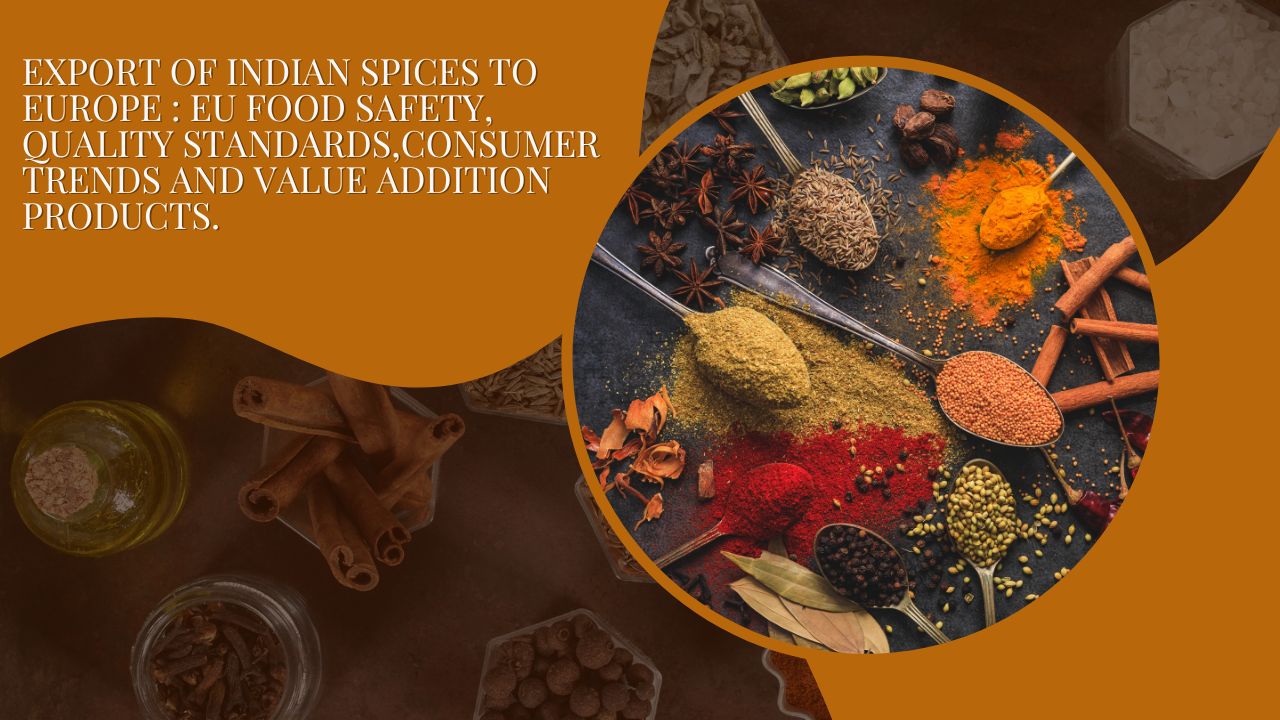
What EU importers expect from Indian Dehydrated Vegetables supplier – Less Moisture Content,Best Quality Dehydrated Garlic,Standard Packaging,Well Businees Co-relations,all Documents availablity,Dehydrated Vegetabales Related Certifications,premium food lab exporter all products,Whole Specifications wise COA.
For an EU Spices importer – At advance Food Industries premium food ingredients exporter to Spices importers,wholesalers, food processors, and private label brands.
The EU's food-safety expectations
- European buyers prioritise pesticide limits, traceability, sustainability and clean-label sourcing. advance Food supports these requirements through residue-aware sourcing, integrated processing and certifications including EU Organic, BRC, Kosher, Halal and Rainforest Alliance.
- Pesticide residues (MRLs) - the EU sets maximum residue levels for pesticides, and spices are tested against them. Residues above the limit lead to rejection, so crop and supplier practices upstream matter.
- Aflatoxins and mycotoxins - naturally occurring contaminants linked to storage and drying conditions, with strict limits for spices such as chilli,Turmeric and certain ground products Like a Garlic,Onion,Ginger Powders - testing is routine.
- Illegal dyes and contaminants - controls target adulterants such as Sudan dyes in chilli and other unauthorised colours, which are not permitted in food.
- Microbiological safety - limits and controls around microbial load, with treatment and handling expected to keep products within specifiactions.
- Traceability - the EU expects food to be traceable through the chain, so importers need suppliers who can trace a lot back to its origin and processing.
The key point for buyers: these are obligations the EU importer must satisfy. A strong supplier does not magically grant EU clearance - it gives you product that is made and tested to stand up to these checks, plus the documentation to evidence it.
Why lab testing and a COA matter to EU importers
Given how much of the EU framework is about what you cannot see residues, aflatoxins, trace dyes the only credible protection is laboratory testing and a Certificate of Analysis for the specific batch. A COA turns "we believe it is clean" into documented results an importer can check against the limits before product enters the European chain.
This is also where quality-management frameworks earn their place. The disciplines behind ISO 22000 and HACCP hazard analysis, controlled drying and storage, consistent processing are precisely what keep aflatoxins, contamination and residue risks down at source, so the COA tends to confirm good practice rather than catch a problem after the fact. For an EU buyer, a supplier who works to these frameworks and tests per batch is far easier to onboard than one who tests reactively.
There is a commercial dimension to this too. EU border rejections at custom clearance and increased-control checks are expensive and slow and a single flagged consignment can disrupt a whole supply plan. A supplier whose product is built to clear these checks the first time rather than one whose lots occasionally need re-testing or treatment — protects your timelines as much as your compliance. Seen that way, rigorous testing and documentation are not overhead; they are what keeps a European programme predictable.
Consumer Trends Reshaping Demand
The way European consumers engage with and acquire spices has changed; they now actively participate in their buying decisions by doing research on what they purchase and understand what is on the label. As a result,Dehydrated Vegetables Supplier in india - must consider the impact of this shift as they market their products to these consumers.
Additionally, there is an increasing demand from European consumers for responsibly sourced products. This includes the production of organic Indian spices being sold in the UK, spice blends that contain no chemical fumigants, and other clean label products. Clean label products will continue to grow in popularity as more supermarkets and foodservice channels adopt them into their product offerings.
Finally, another trend shaping the marketplace is the growth of convenience-oriented consumption patterns and there is a strong demand for ready-to-eat spices Premix ( Dehydrated Vegetables Powders, Spices blends, Seasoning ingredients), especially among urban populations. There is a growing usage of Onion & Garlic powder because of its beneficial health properties as well as its ability to provide flavour. European food manufacturers are turning to natural products for solutions to their food manufacturing needs.
Product Innovation and Value Addition
The future of Indian spices in the European Market will not only depend on raw material supply but also focus on value addition as a growth driver. European Masala Manufacturer & seasoning Manufacturer require ingredients that allow them to produce products with less effort and create consistent product quality.
The most popular trade in spices includes processed spice forms (like Garlic Powders,Ginger Powder,Amchur Powder,Tomato Powder), blended spices (Pizza Seasoning,Noodles masala etc..). Even though turmeric Fingers & Powder is traditionally used as a spice,many European food companies are now reworking it into new forms of industrial use, such as using Bulk Turmeric Powder that meets certain curcumin or colour specifications.
Indian Dehydrated Vegetables exporters that take advantage of R&D capability and application-specific processing will be able to take advantage of the fast-growing segment of this market.
\
Conclusion
The future of the Import path for Indian Spices in the European Market will be defined by Flexibility & Adaptability, not Disruption. Long-Term Success will be based on Quality, Compliance & Sustainability rather than Quantity. Long-term Investment in these three areas will allow food ingredients exporters access to a stable, long-term growth opportunity in the European market.
In a regulatory environment where Flavour and Regulation meet, Indian spices will continue to be relevant to the European spice market, traditionally-rooted yet catering to the needs of Modern-Day Europe.