
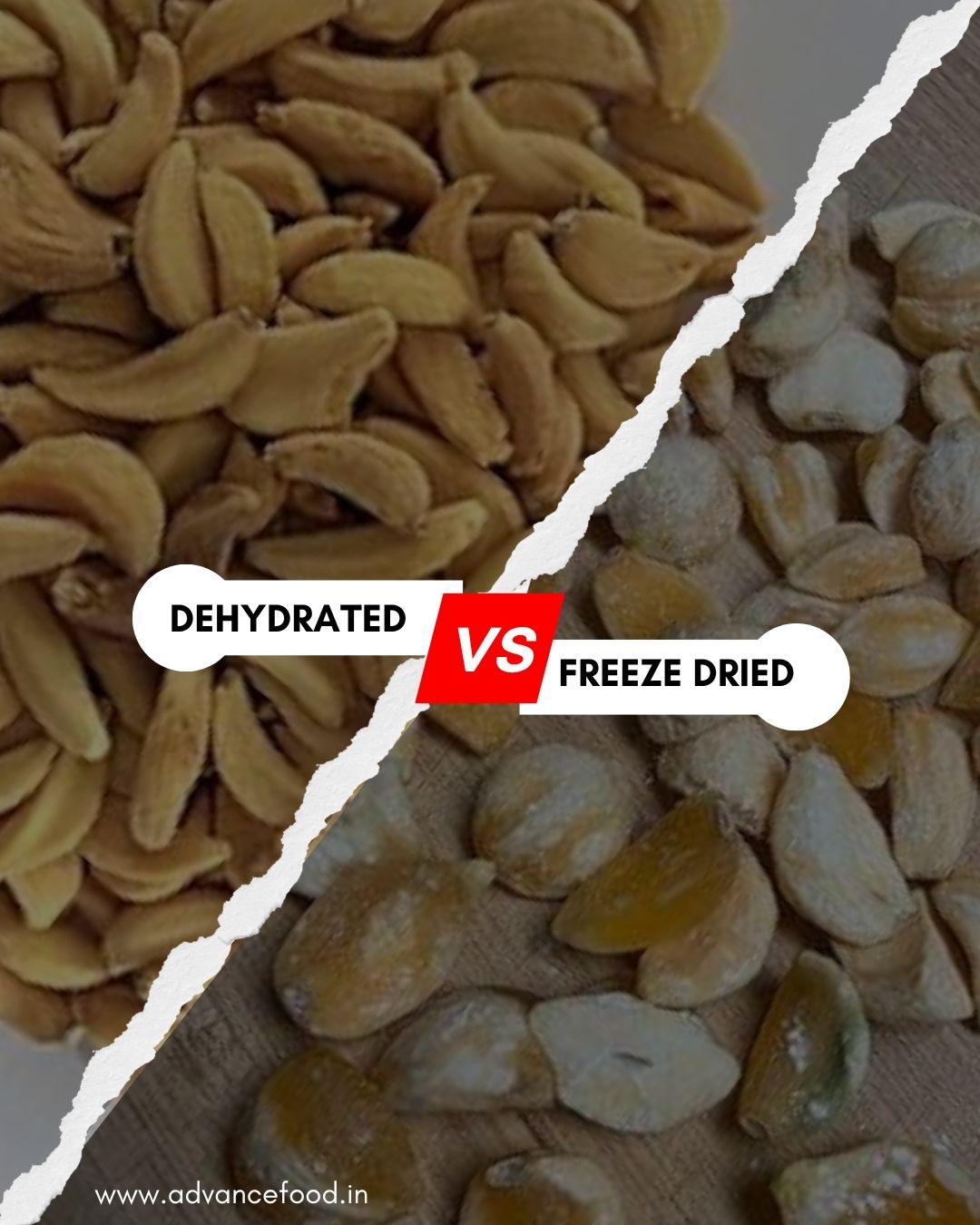
When it comes to choosing the right Vegetables preservation method,between the freeze-dried vs dehydrated Vegetables - Both methods remove moisture from vegetables to extend shelf life, but they differ significantly in terms of process, texture, taste, nutritional retention, shelf stability, and applications.
Which One is Better ?
difference between freeze-dried and dehydrated Vegetables :
Feature | Freeze-Dried | Dehydrated |
|---|---|---|
Shelf Life & Storage | 25- 30 years – sealed ,moisture proof containers | 1-5 years - refrigeration to extend their shelf life |
Water Content | Removing 98% to 99% of water | Removing roughly 80% to 95% of water |
Nutritional Retention | Retains up to 98% of nutrients | Retains approximately 50% - 60% of nutrients |
Texture | Light and airy, similar to original once rehydrated | Brittle,Chewy, with a denser texture |
Taste & Flavor | Natural taste and aroma | cooked taste, some loss of flavor |
Rehydration Time | Within seconds to minutes with the addition of water | Requiring several minutes to hours |
Processing Method | Sublimation through cold and vacuum | Heat-based drying |
Weight | Extremely lightweight | Slightly heavier |
Cost | Higher due to processing complexity | Cheaper and more affordable |
Environmental Impact | Higher energy consumption in processing | Lower energy consumption in processing |
Applications | Soups, ready-to-eat meals, camping meals, emergency supplies, military rations, snacks, cereals, pasta, pet food, and long-term storage. | Soups, noodles, ready-to-eat meals, snacks, sauces, seasonings, food manufacturing, pet food, and long-term storage. |
Availability | High-end and specialized stores | Widely available in food stores |
Processing
Freeze Dried :
Steps in the conventional dehydration process :
- Preparation: Wash, peel, and cut food into regular pieces to ensure even drying.
- Pretreatment (optional) : Soak foods prone to discoloration, such as apples or bananas, in a lemon water solution or other preservative.
- Arrange food on trays: Place prepared food on dehydrator trays in a single layer, avoiding overlap for efficient air circulation.
- Set temperature: Set the dehydrator to the correct temperature (usually 125-135°F or 50-60°C) depending on the type of food.
- Dehydrate: Allow the food to dry for several hours, periodically checking that the desired texture and moisture level are achieved.
- Cool and store: Allow dried food to cool completely, then store in airtight containers to preserve freshness and extend shelf life.
Dehydrated :
Steps in the freeze-drying process:
- Freezing food: Food is frozen to extremely low temperatures (-40°F or below) to solidify all the water in the food into ice.
- Creating a vacuum environment: The freeze-dryer reduces the surrounding pressure, creating a vacuum that prepares the food for sublimation.
- Sublimation (moisture removal): The ice in the frozen food sublimates (goes directly from solid to gas) under low pressure and controlled heat, leaving the food with a water content of approximately 2%.
- Secondary drying: Residual moisture is removed at slightly higher temperatures to ensure maximum dryness and extend shelf life.
- Packaging and storage: Freeze-dried foods are packaged in airtight containers with oxygen absorbers to prevent spoilage and maintain freshness for up to 25 years.
Conclusion :
Both freeze-dried and dehydrated vegetables have unique advantages and applications. If quality, nutrition, and shelf life are top priorities, freeze-dried vegetables are the superior choice. However, if affordability and large-scale production efficiency are the main concerns, dehydrated vegetables may be the better option.
The right choice depends on your business goals, customer preferences, and intended product applications. Regardless of which method you choose, both contribute to reducing food waste and increasing the availability of preserved vegetables in the market.